How to Read a Supplement Facts Panel: Serving Size to Red Flags
Key takeaways
- The Supplement Facts panel is a regulated disclosure; the front of the bottle is marketing.
- Serving size determines both the real dose and the real cost per day.
- Percentage Daily Value only exists for nutrients with an established DV; botanicals show a dash.
- Ingredient form affects absorption — the same milligram figure can mean different things.
The panel beats the marketing
Every regulated supplement sold in the US carries a Supplement Facts panel. It is a standardised disclosure, and it is the most reliable thing on the package.
Learning to read it takes about ten minutes and serves you for every purchase afterwards. It is also the best defence against the two most common problems in this industry: underdosed formulas and misleading serving arithmetic.
Serving size, the first trap
Start at the top, with "Serving Size" and "Servings Per Container."
Everything listed below is the amount per serving — not per capsule, tablet or gummy. If the serving size is two capsules, the figures require taking two.
This matters twice. It changes the actual dose you receive. And it changes the actual price: a 120-capsule bottle with a four-capsule serving is a 30-day supply, and costs four times per day what the bottle price suggests.
When comparing two products, always convert to cost per day at the labelled serving. It is frequently the opposite of what the shelf price implies.
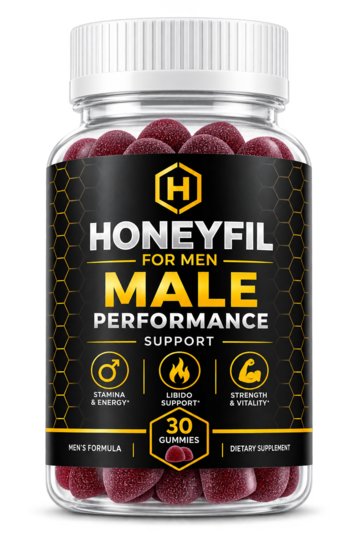
Formats where one unit is one serving remove this ambiguity entirely — a once-daily gummy such as HoneyFil means the panel figures and your daily intake are the same number.
Amounts and daily values
Each ingredient should show an amount per serving, usually in milligrams or micrograms, and where an established Daily Value exists you will also see a percentage.
Two things to understand. A very high percentage is not automatically better — some nutrients have tolerable upper limits, and fat-soluble vitamins can accumulate. And many botanical ingredients have no established Daily Value at all, so that column shows a dash. That is normal, not a warning sign.
What is worth checking is whether the listed amount sits in the range used in whatever research the marketing gestures toward. A common pattern is citing a study on an ingredient without mentioning the study used several times the amount present.
Proprietary blends
A proprietary blend appears as a group of ingredients under a single combined weight, with no individual amounts. Ingredients within it must be listed in descending order by weight, so the first is the largest component — but that is all you learn.
The remainder could be present in trivial quantities. Where a blend contains one cheap bulk ingredient and several expensive-sounding ones, the ordering is worth reading carefully.
Formulas that disclose each ingredient separately give you more to work with. That is one of the practical reasons to prefer them, and it is a point covered further in our buyer's guide.
Forms and standardisation
For minerals, the form appears in parentheses — zinc as oxide, citrate, glycinate or picolinate; magnesium as oxide versus glycinate. Absorption varies meaningfully, and oxide forms are generally cheaper and less well absorbed.
For botanicals, look for standardisation: an extract standardised to a stated percentage of a named compound is more informative than a plain plant name, because it tells you something about consistency between batches.
You will also see extract ratios such as 10:1, meaning ten parts raw material produced one part extract. Ratios and standardisation are not interchangeable, and a ratio alone does not tell you the active content.
Other information on the label
Beyond the panel, several things belong on any legitimate product.
Other ingredients lists the non-active components — binders, fillers, colours, sweeteners. Relevant if you have allergies or dietary requirements.
Directions and warnings should state how to take it and who should not. Missing contraindication information is a meaningful gap.
Manufacturer name and address should be present and findable.
Lot number and expiry date should be printed or stamped. Their absence is a genuine quality concern.
The FDA disclaimer appears on any product making structure/function claims. Its presence is normal and expected, not a warning.
When a number only appears in an advert
Here is a practical rule worth carrying. If a dosage figure appears on a sales page but not on the panel, trust the panel.
Formulations and packaging change over time while old marketing lingers online for years. Third-party pages and archived adverts routinely circulate figures that no longer describe the current product.
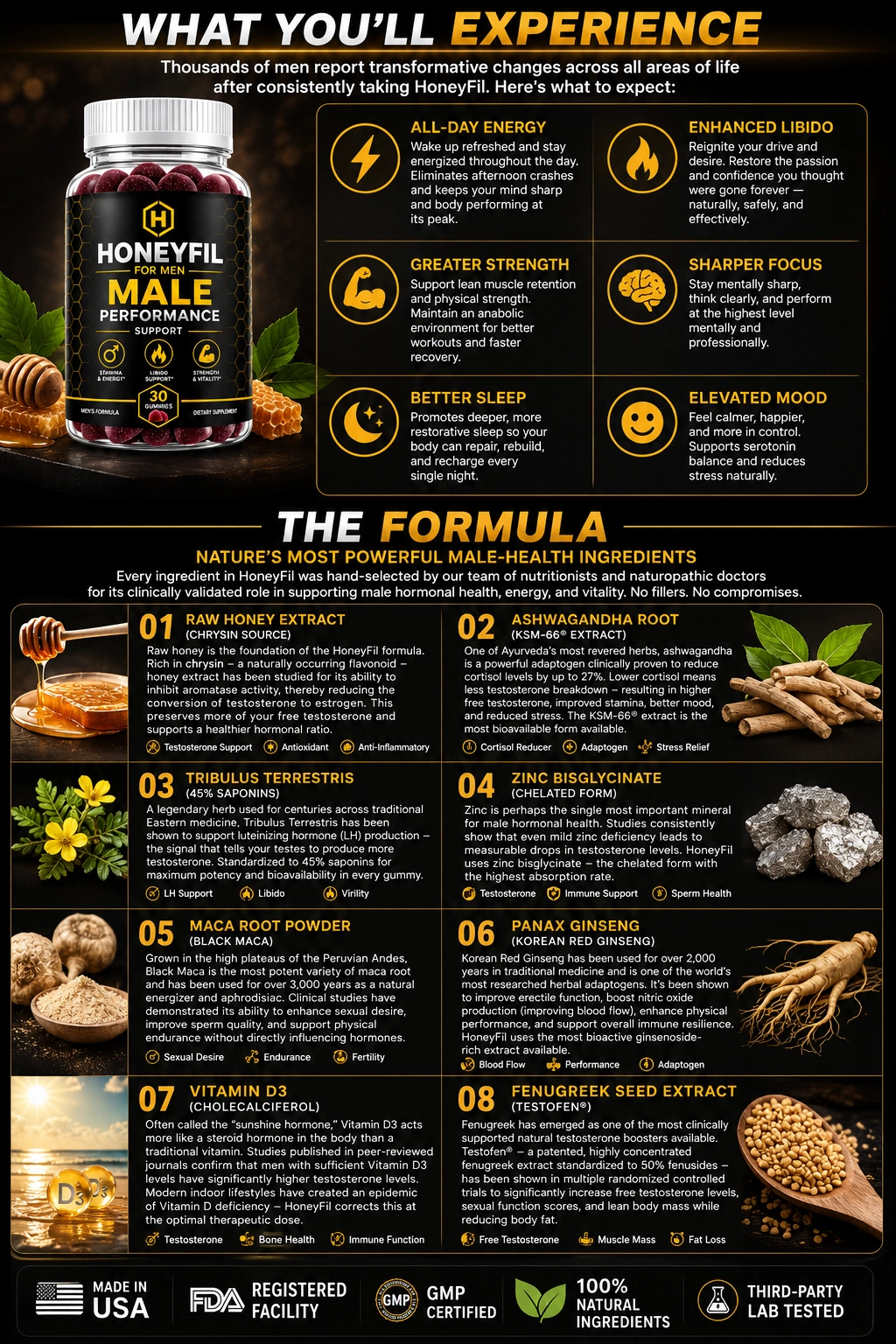
This is why a brand declining to publish unverified amounts is behaving correctly rather than evasively. The HoneyFil ingredients page names all eight ingredients and their roles while pointing you to the physical panel for amounts — which is the accurate answer, even if it is a less convenient one.
Turn the bottle around. Spend a minute on the part nobody is trying to make exciting. And if you take prescription medication or manage a condition, take the actual label to a healthcare professional rather than relying on any website, this one included.
One Gummy. Once a Day.
HoneyFil is a once-daily men's vitality gummy designed to support healthy circulation, daily energy, stamina, endurance and overall male wellness. One-time purchase, no auto-renewal, 60-Day Satisfaction Promise.
Individual results vary.
Order HoneyFil →Frequently asked questions
What does serving size mean on a supplement label?
Serving size tells you how many capsules, tablets or gummies constitute one serving. All ingredient amounts listed below it apply per serving, not per unit.
What does % Daily Value mean?
It shows how much a serving contributes to an established daily reference intake. Many botanical ingredients have no established Daily Value, so that column shows a dash.
Does the form of a mineral matter?
Yes. Absorption varies between forms. Oxide forms are typically less well absorbed than chelated forms such as citrate, glycinate or picolinate.
Should I trust dosages listed on a sales page?
Trust the Supplement Facts panel on the physical bottle. Formulations change while old marketing remains online, so advertised figures may no longer be accurate.
Safety Information
HoneyFil is a dietary supplement, not a treatment for any medical condition. It is not for anyone under 18, and it is not intended for women or anyone who is pregnant or breastfeeding.
Consult a healthcare professional before use if you take prescription medication — especially blood-pressure medication, nitrates, blood thinners or diabetes medication — manage a medical condition, or are preparing for a medical procedure. If you are experiencing persistent changes in sexual function, energy or circulation, speak with a qualified healthcare professional rather than relying solely on a dietary supplement.
The Supplement Facts panel on the bottle you receive is the definitive reference, since formulations and packaging can change.
These statements have not been evaluated by the Food and Drug Administration. This product is not intended to diagnose, treat, cure, or prevent any disease.
Return to the HoneyFil homepage, explore the full ingredients guide, or read the HoneyFil review page.