How Long Do Men's Vitality Supplements Take to Work?

Key takeaways
- There is no guaranteed timeline for any dietary supplement, and individual experiences vary widely.
- Two weeks is long enough to establish a habit, not long enough to evaluate an effect.
- 60 to 90 days of consistent use is a more practical evaluation window.
- Changing several things at once makes attribution guesswork — change one variable if you want a clear read.
The short answer
There is no guaranteed timeline, and any page that gives you one is making a marketing claim rather than a factual statement.
What can be said usefully is this: a consistent 60 to 90 day period is a more practical window for evaluating your individual experience than a few days or weeks. That is the framework behind HoneyFil's stated approach, and it applies to most daily wellness supplements.
Individual results vary. That phrase appears on every legitimate supplement page for a reason — it is true.
Why two weeks tells you nothing
Most men judge a supplement far too early, and there are three reasons that judgement is unreliable.
Normal variation swamps the signal. Your energy, mood and physical performance fluctuate substantially week to week based on sleep, workload, stress, hydration and what you ate. Over fourteen days, that natural variation is larger than any subtle change a supplement might contribute.
Expectation shapes perception. This cuts both ways. Men who expect dramatic results often report feeling something in the first week; men who expect nothing often notice nothing regardless. Neither reaction is good evidence.
Nutritional changes are cumulative. Where a nutrient or botanical does contribute something, it is usually through gradual physiological processes rather than an acute effect you feel within an hour.
A realistic timeline
First 14 days — habit formation
This period is about establishing consistency, not assessing effects. The useful question is whether the routine actually fits your day. If you are already forgetting doses in week one, that is the signal worth acting on.
Around 30 days
You now have enough consistency for the question to become meaningful. It is still early for conclusions, but you can start noticing how the routine sits alongside your other habits.
Around 60 days
Two months is a more meaningful period. You have enough data points across enough different weeks — good ones and bad ones — to see past normal variation.
Around 90 days
This is the natural decision point. Ninety days is long enough to reassess your overall routine honestly and decide whether continuing makes sense for you.
Around 180 days
A six-month supply represents a longer consistency period for men who have already decided to maintain the routine. It is not a starting point for evaluation.
The confounding-variables problem
Here is the thing almost nobody mentions. Most men who start a supplement also start doing other things — sleeping better, walking more, drinking less, paying attention to food. That is human nature: the purchase signals intent, and the intent spills over.
It is also why attribution becomes guesswork. If you improved your sleep, added a daily walk and started a supplement in the same fortnight, and you feel better eight weeks later, you cannot say which did it. Probably the sleep.
If you genuinely want to know what a supplement contributes, change one thing at a time. If you mainly want to feel better, change several — just do not credit the wrong one afterwards. Several of the accounts on the HoneyFil reviews page are notably honest about exactly this.
How to actually evaluate it
Subjective memory is unreliable over eight weeks. A few simple practices help.
Note a baseline before you start — three or four things you care about, rated roughly out of ten. Energy through the afternoon. Recovery after exercise. General sense of drive. Whatever is relevant to you.
Re-rate them at 30, 60 and 90 days, ideally without looking at your previous scores until afterwards. It takes two minutes and it is far more reliable than trying to remember how you felt in March.
And be honest about what else changed in the same period.
When to stop
Stop if you notice any adverse reaction, and speak to a healthcare professional. Stop if a doctor advises it. Stop if 90 days of genuinely consistent use has produced nothing you value — continuing out of sunk cost is not a strategy.
Most reputable products have a satisfaction window for this reason. HoneyFil's is a 60-Day Satisfaction Promise from the original purchase date. Read the terms before ordering rather than after, and note that the window and your evaluation period may not perfectly align — which is worth factoring into which package size you choose.
Timeline claims that are red flags
Certain claims should end your interest in a product immediately.
Anything promising results in days. Anything guaranteeing a specific outcome by a specific date. Anything describing itself as working "instantly" or "overnight" for a physiological process that takes weeks. Anything implying it treats a medical condition — a dietary supplement legally cannot.
Realistic timeline language is not weak marketing. It is the more trustworthy signal. For more on separating reasonable products from overclaiming ones, see how to choose a men's vitality supplement, and check any label using our Supplement Facts guide.
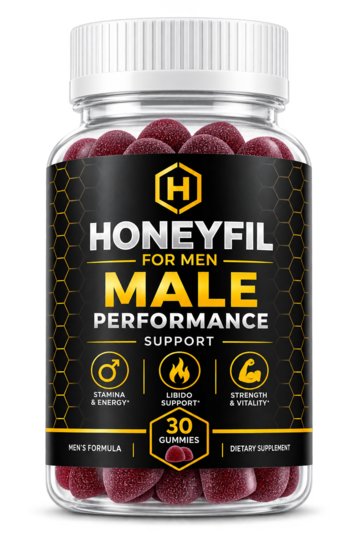
One Gummy. Once a Day.
HoneyFil is a once-daily men's vitality gummy designed to support healthy circulation, daily energy, stamina, endurance and overall male wellness. One-time purchase, no auto-renewal, 60-Day Satisfaction Promise.
Individual results vary.
Order HoneyFil →Frequently asked questions
How long does HoneyFil take to work?
There is no guaranteed timeline. A consistent 60 to 90 day period provides a more practical window for evaluating your individual experience. Individual results vary.
Should I feel something in the first week?
Not necessarily, and drawing conclusions from a single week is unreliable. Normal week-to-week variation in energy and performance is larger than any subtle change a supplement might contribute.
How do I know if a supplement is working?
Note a baseline for a few things you care about before starting, then re-rate at 30, 60 and 90 days. Be honest about what else changed in the same period.
When should I stop taking a supplement?
Stop if you notice any adverse reaction and consult a healthcare professional, if a doctor advises it, or if 90 days of consistent use has produced nothing you value.
Safety Information
HoneyFil is a dietary supplement, not a treatment for any medical condition. It is not for anyone under 18, and it is not intended for women or anyone who is pregnant or breastfeeding.
Consult a healthcare professional before use if you take prescription medication — especially blood-pressure medication, nitrates, blood thinners or diabetes medication — manage a medical condition, or are preparing for a medical procedure. If you are experiencing persistent changes in sexual function, energy or circulation, speak with a qualified healthcare professional rather than relying solely on a dietary supplement.
The Supplement Facts panel on the bottle you receive is the definitive reference, since formulations and packaging can change.
These statements have not been evaluated by the Food and Drug Administration. This product is not intended to diagnose, treat, cure, or prevent any disease.
Return to the HoneyFil homepage, explore the full ingredients guide, or read the HoneyFil review page.